


1. Nanomedicine utilizes materials
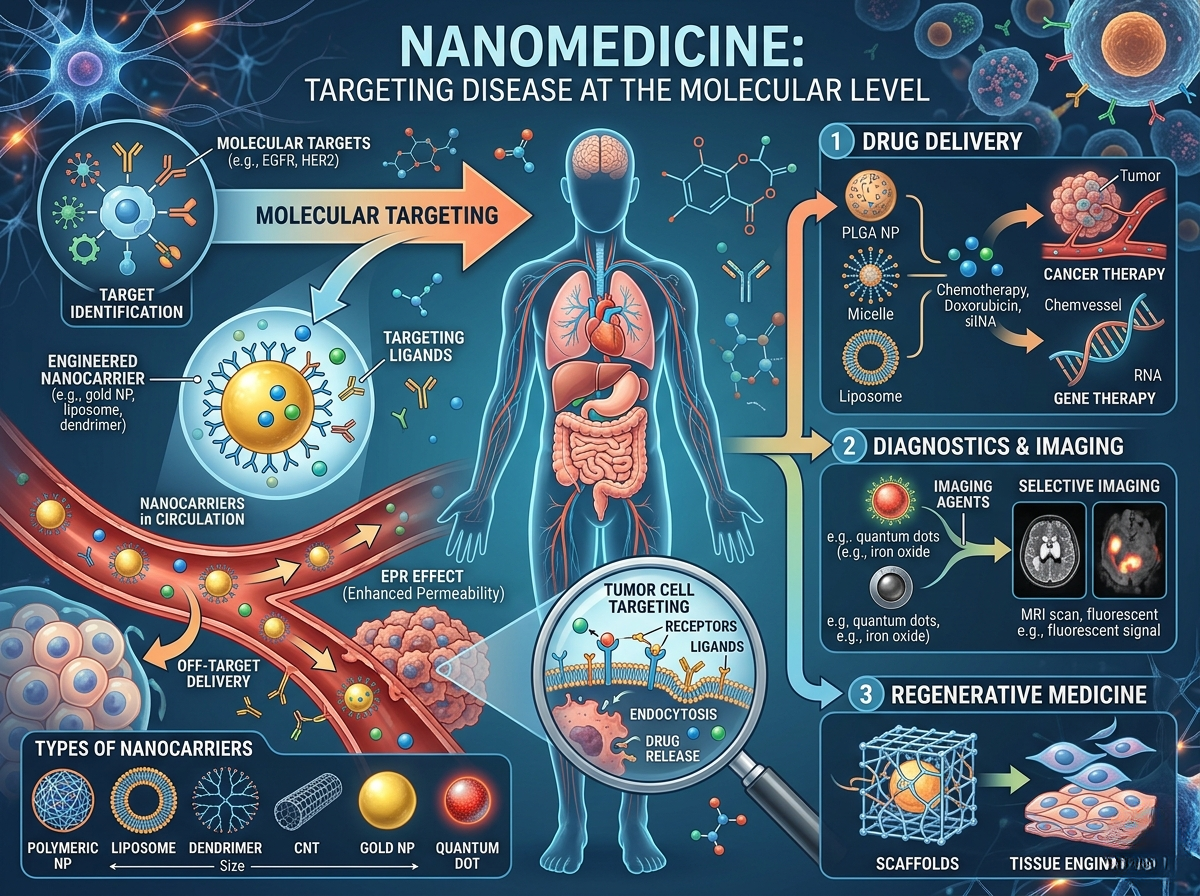
Nanomedicine utilizes materials at the billionth-of-a-meter scale to diagnose and treat diseases with unprecedented precision. These “nanocarriers” can be engineered to encapsulate potent drugs and transport them directly to diseased cells—such as malignant tumors—without affecting the surrounding healthy tissue.
2. Targeted delivery
This targeted delivery mechanism significantly reduces the systemic side effects typically associated with traditional treatments like chemotherapy. Beyond drug delivery, nanorobots are being designed to perform micro-surgeries, clear arterial blockages, or repair cellular damage from the inside out. Furthermore, nanoparticle-based contrast agents are enhancing the sensitivity of diagnostic imaging, allowing clinicians to detect tiny clusters of cancerous cells long before they become visible on standard scans.
3. Refine our ability
As we refine our ability to manipulate matter at the nanoscale, nanomedicine will move from theoretical laboratory research to a cornerstone of modern therapy, making medicine more effective and far less invasive for the patient.