



1. Augmented Reality (AR) and Virtual Reality (VR)
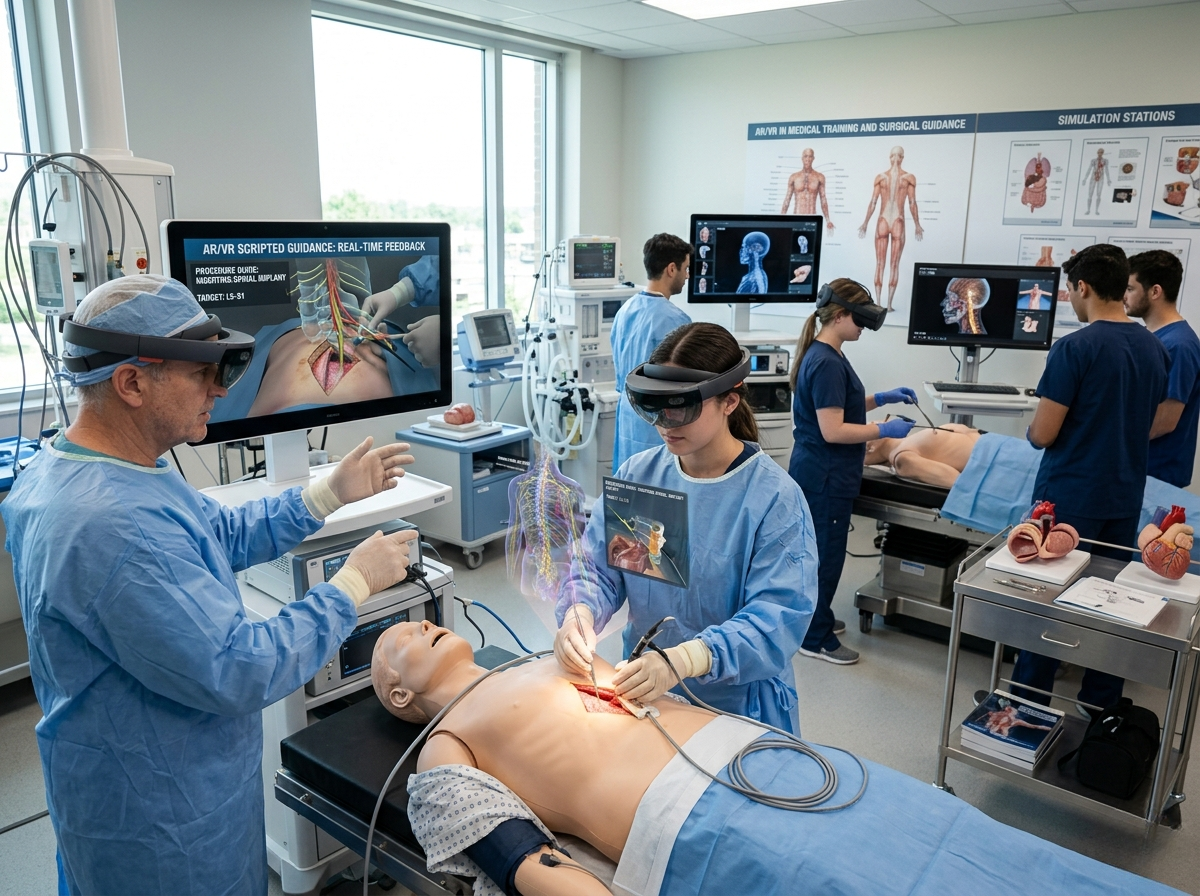
Augmented Reality (AR) and Virtual Reality (VR) are radically changing how medical professionals learn and perform. VR provides an immersive, risk-free environment where surgeons can practice intricate procedures on highly realistic digital patients, refining their skills before touching a real human being.
2. Flight simulator
This “flight simulator” approach to medical training significantly lowers the learning curve and builds muscle memory. Meanwhile, AR technology is being used in the operating room to overlay 3D anatomical data directly onto the patient’s body, essentially giving the surgeon “X-ray vision.” This guidance allows for greater accuracy when navigating through complex nerves, blood vessels, or internal organs.
3. Medical students
For medical students, these tools transform static textbooks into dynamic, three-dimensional experiences, allowing them to explore human anatomy with unparalleled depth. As these immersive technologies become more accessible, they will serve as standard tools for both continuous medical education and real-time clinical decision support.
