
1. Brain-Computer Interface (BCI) technology
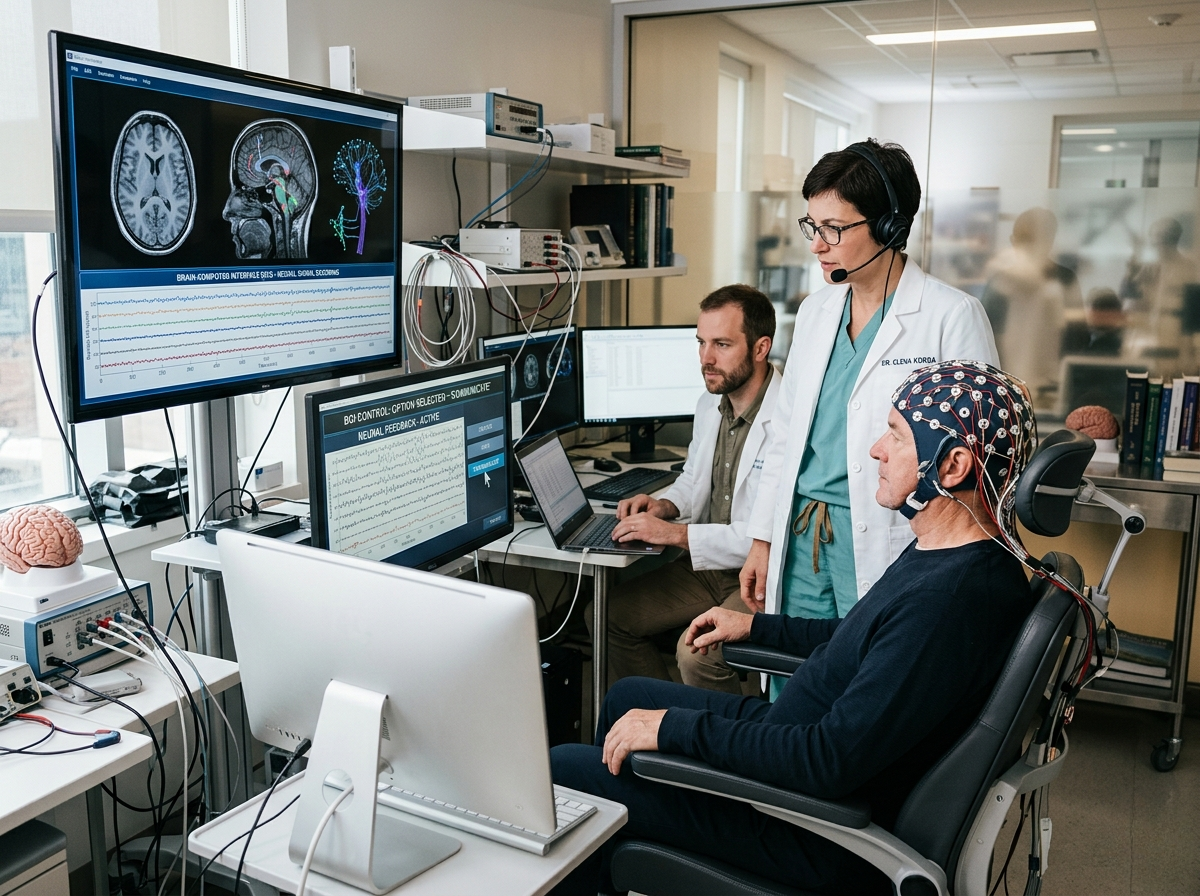
Brain-Computer Interface (BCI) technology represents the next frontier in neuro-restoration, offering a direct communication pathway between the human brain and external digital devices. By implanting or wearing sensors that detect neural activity, BCI systems can translate electrical signals from the brain into actionable commands for prosthetic limbs, computers, or communication tools.
2. Innovation
This innovation is transformative for patients with severe motor impairments, such as those suffering from spinal cord injuries, ALS, or stroke, as it effectively bypasses damaged biological pathways. Recent breakthroughs in high-resolution neural decoding are allowing users to perform complex tasks, such as typing on a screen or controlling a robotic exoskeleton, simply by “thinking” about the movement. Beyond mobility, researchers are exploring BCI applications for managing neurological disorders like chronic depression and epilepsy by providing targeted neuro-stimulation. As this technology matures, it promises to restore autonomy and independence to individuals previously confined by physical limitations, effectively blurring the line between human cognitive intent and digital execution. This field is moving rapidly from experimental research toward clinical reality, challenging our understanding of human capability and the potential for technological integration in neuro-rehabilitation.